NIPOMO: Historical Screenplay
A documentary photographer for the federal government returns in 1939 to a California migrant camp where she took her most famous photograph three years earlier. The woman in the photograph tells her that the caption she wrote was wrong. The photographer drives to Texas to find out what the caption missed, and discovers that a man she photographed out of existence died trying to do something the photograph could not do for him.
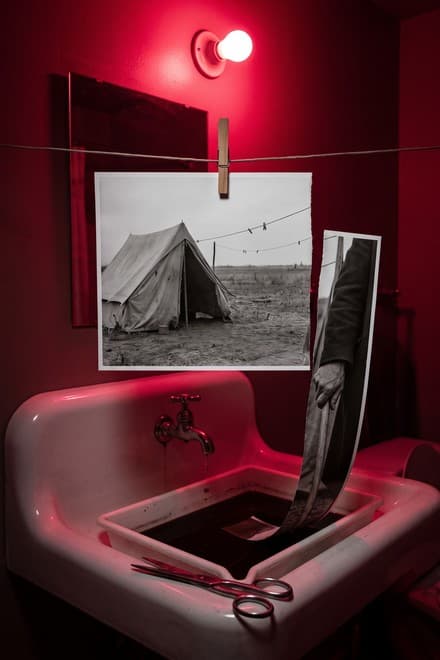
Margaret Hayes is an FSA documentary photographer who in 1936 took what became the most recognized image of the Great Depression: a woman and three children at a pea-pickers camp in Nipomo, California. When she returns to the camp in 1939, she finds the woman still there, and learns that the caption she wrote was wrong. The woman's husband did not leave for work in another county. He stayed in Dalhart, Texas, and died on Black Sunday, April 14, 1935. He was not killed by the storm. He was killed for what he was trying to do the following day. The film follows Margaret's investigation from the California camps to the Texas Panhandle and back: what she finds, what it costs, and what she finally decides to do with the camera.
- Genre: Historical
- 100 pages
- Language: EN
- Format: feature screenplay, instant PDF download
- Reader Access only; production, distribution and exclusive rights are not offered
- Every screenplay on ScriptLix is developed in house using AI tools under human direction. A person chooses the concept, then reads and corrects the draft before it is published.
More Historical on ScriptLix
Browse all Historical screenplays or explore the full screenplay catalog. Want notes on your own script? Get free coverage.